
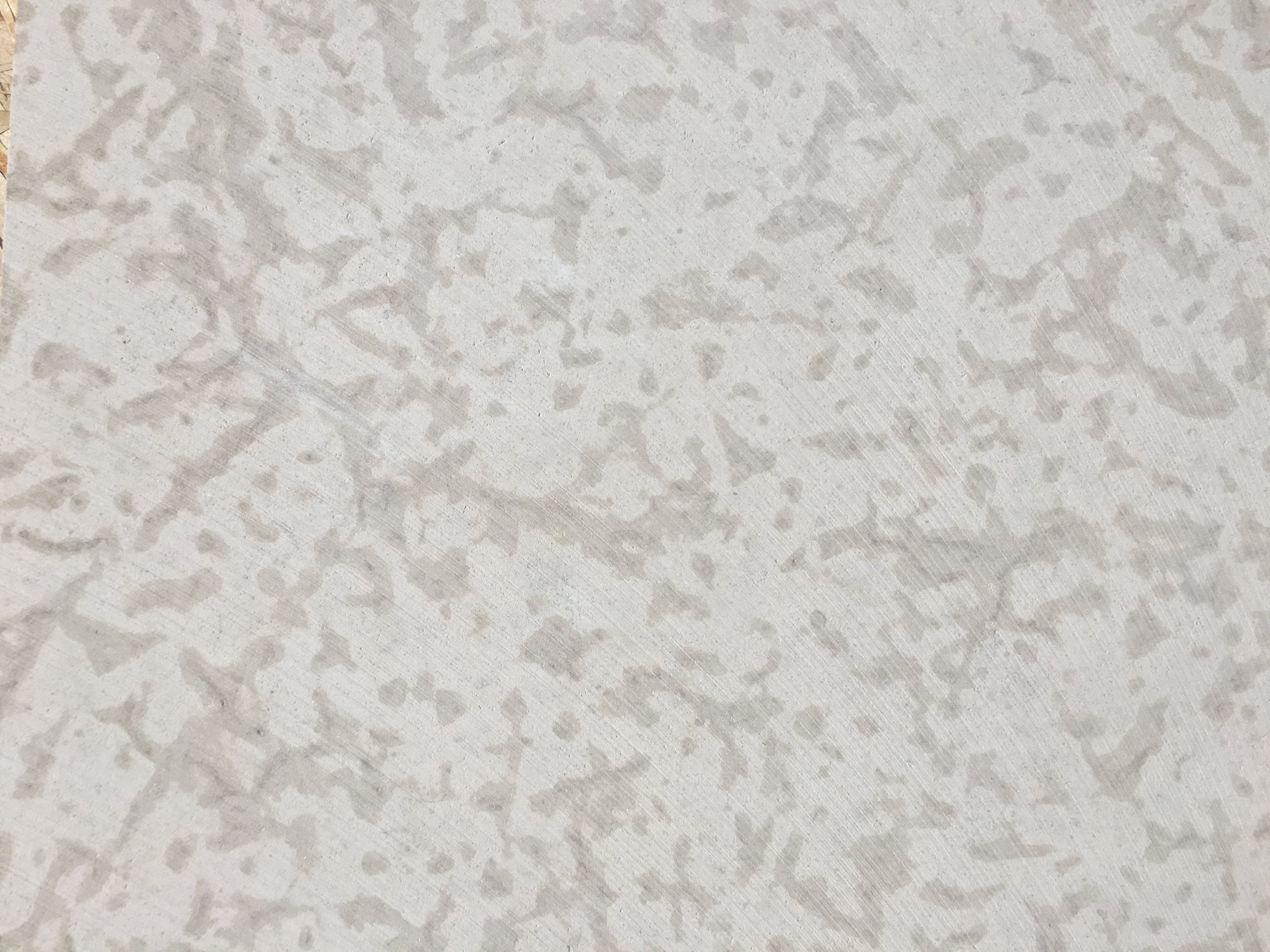
Physical characteristics of Tyndall Stone®
Note: The physical and chemical properties vary somewhat depending on whether the tested sample is buff, grey, wet, dry, or contains more or less mottling.
The following tests are representative averages.
WEIGHT: (Dry) - 2,435 kg/m3
SPECIFIC GRAVITY: 2.44
COMPRESSIVE STRENGTH - (ASTM C-170-50)
(average) - dry - 62.8 M Pa
(average) - wet - 64.8 M Pa
TRANSVERSE STRENGTH:
1,340 p.s.i.
SHEAR STRENGTH:
1,056 p.s.i.
MODULUS OF RUPTURE - (ASTM C-99-52)
(average) - dry - 9.9 M Pa
(average) - wet - 5.2 M Pa
WATER ABSORPTION - (ASTM C-97-47)
(average) 3.49%
Ratio of absorption percent:
1 hour - 1.335%
2 hours - 2.499%
Under pressure - 4.653%
Pore Space - 11.36%
MODULUS OF ELASTICITY:
41.37 G Pa
COEFFICIENT OF THERMAL EXPANSION:
Per C - 5.4 x 10⁻⁶ mm per mm
THERMAL RESISTANCE:
102m2C
W
(90 mm thick stone - stone only - no allowance made for film effect)
LIGHT REFLECTANCE:
Split Face - 70%
Cut Stone - 82%
SOUND RATING:
N.B.C.C. class II (Sound Reduction Factor - 90mm thick stone - 42 decibels)
REFERENCES:
Frank H.T. Rhodes 1962: Life Of The Past; Fossils: A Guide to Prehistoric Life; Golden Press New York
